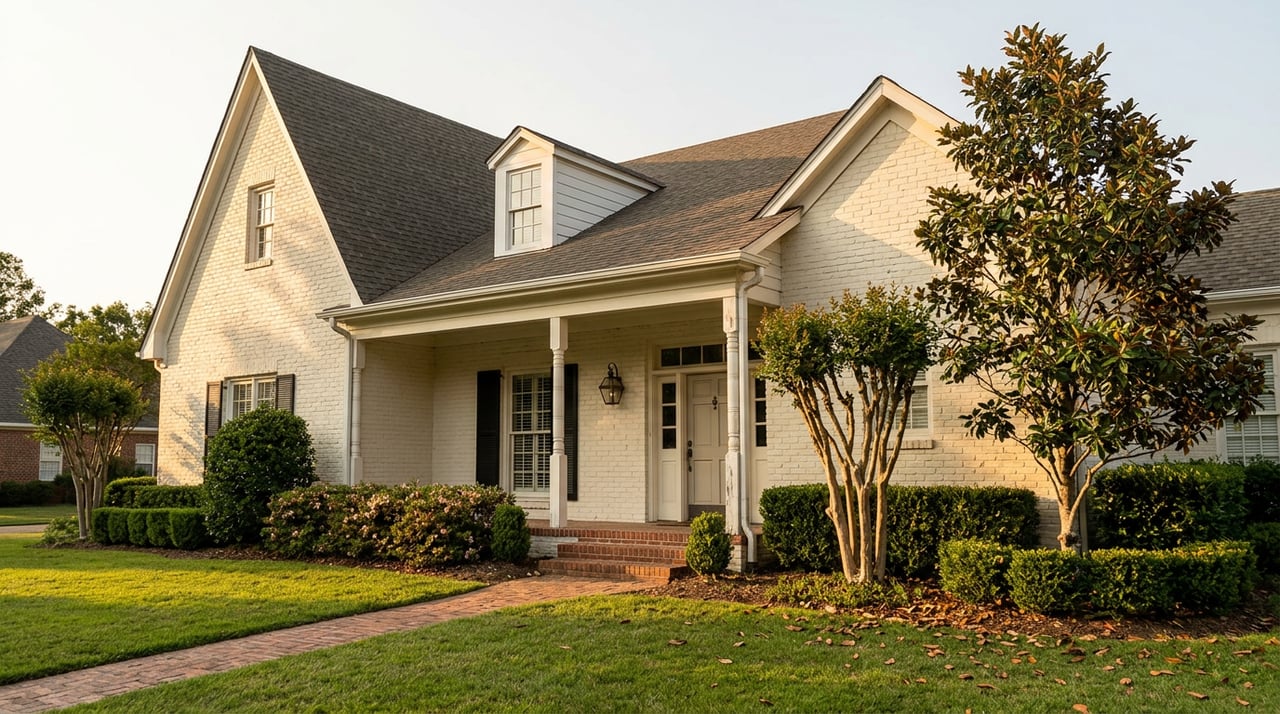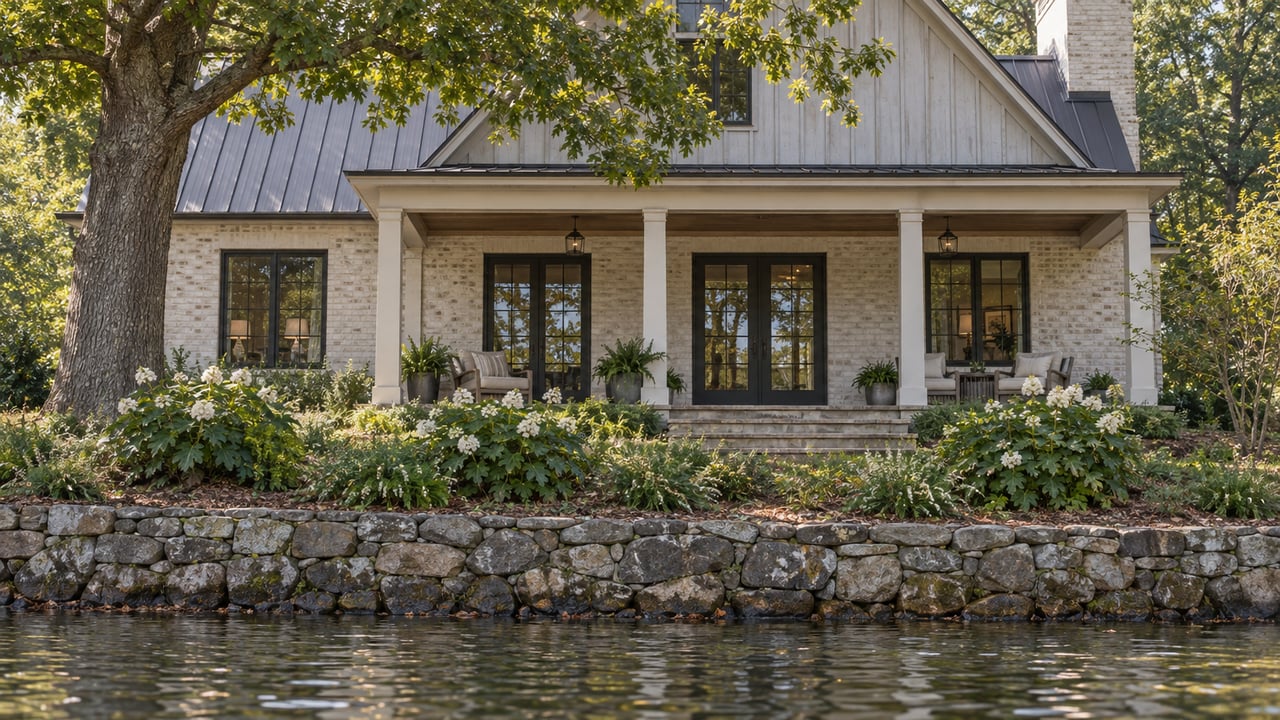
A buyer under contract on a Jackson Lake home called our office confused. Her closing attorney had just told her that the sale couldn't close until Georgia Power finished transferring a lease, and that the process takes three to four weeks. Nothing in the listing had mentioned a lease. The photos showed a dock, a lawn running to the water, and a price that seemed fair for the shoreline. What the listing hadn't spelled out was who actually owned the ground under that dock.
That gap between what a Jackson Lake listing shows and what it discloses is the reason this piece exists. Two homes can sit a few lots apart, carry similar square footage, and look identical in photos, while one comes with a deed that runs to the water and the other comes with a lease that Georgia Power can renew, restrict, or bill for taxes in a completely different way than the county does.
What "Waterfront" Actually Describes on Jackson Lake
Georgia Power built Lloyd Shoals Dam between 1908 and 1911 and has operated it since 1928, and its hydroelectric license from the Federal Energy Regulatory Commission still gives the company authority over the shoreline it created. That authority shows up in three different property arrangements around the lake, and listing photos rarely tell you which one you're looking at.
Some lots are fee simple, meaning the owner holds a warranty deed running down to the lake's high-water mark. A recent listing in the Alcovy section describes exactly this kind of property, an all-brick home on a deeded lot in what the listing calls a sought-after part of the lake. Other lots are full leases, where Georgia Power owns the land itself and the resident owns only the house and any dock or boathouse sitting on it. A third category, access lots, splits the difference: the owner holds a deed to most of the property, but a strip of shoreland closest to the water remains Georgia Power's, governed by a separate access lease with its own annual fee.
A different listing on the market right now makes the stakes plain without any interpretation needed. It's a three-bedroom lakefront home with a private dock, and the listing itself instructs the buyer to verify lease terms, fees, and transfer requirements before closing, because the property is subject to a ground lease. That single line in an otherwise ordinary listing description is the whole argument of this post compressed into one sentence.
Back in 2008, when leased-lot property values were being reassessed across Jackson Lake, a county tax official described the arrangement to the Jackson Progress-Argus this way: "When you compare leased lots with deeded lots, you find that leased lots are generally better." The reasoning offered was practical: leased lots sit on some of the deeper, more desirable stretches of shoreline. The lease structure isn't a downgrade. It's a different set of rules attached to some of the best water on the lake.
The Paperwork Difference That Shows Up at Closing
Georgia Power's residential leases run for a fixed 15-year term, renewable if the lessee stays in compliance, and Georgia Power states that it does not issue 100-year lease terms. When a leased-lot property changes hands, the lease has to be formally transferred, and Georgia Power's own buying and leasing guidance says to expect three to four weeks for that transfer, timed to happen alongside the closing itself. A shoreline management representative also completes a pre-transfer inspection to flag any compliance issues, information that can become part of the seller's disclosure.
Older Georgia Power lease documentation put the transfer fee at $1,500 historically, rising to $3,000 on newly signed leases. Fees vary by lake and change over time, so anyone under contract on a leased lot should confirm the current figure directly with the Central Georgia Lake Jackson Resources Office before assuming a number from an old form still applies.
Taxes work differently too. On a deeded lot, the county assessor sets the value and bills the owner directly. On a leased lot, the Georgia Department of Revenue establishes the lot's value, and Georgia Power passes that cost through to the lessee as part of the annual lease bill. That distinction sat at the center of the 2008 dispute, when leased-lot lessees pushed back on a reassessment they felt outpaced what deeded owners were being charged. The mechanism that produced that argument, state-set values flowing through a private company's billing rather than a county tax notice, is still how leased lots are taxed today.
Why Lenders Look at the Lease Length Twice
A 15-year lease term creates a specific friction with a 30-year mortgage. Fannie Mae's guidelines for leasehold mortgages require the unexpired lease term to outlast the loan's maturity date by at least five years. A brand new 15-year Georgia Power lease doesn't come close to covering a standard 30-year loan on its own, which means the lender is effectively underwriting the renewal right rather than a guaranteed term. Some lenders handle this comfortably. Others decline leased-lot financing outright or attach conditions that don't apply to a deeded purchase down the street. Anyone financing a leased-lot purchase on Jackson Lake benefits from confirming a lender's leasehold experience before writing an offer, not after.
Even a Deed Doesn't Buy Full Control of the Shoreline
It would be easy to read all of this as a case for avoiding leased lots entirely, but a deed doesn't hand a buyer full authority either. Georgia Power's guidance is explicit that even on private, deeded property, the company retains project boundary rights and may hold flood rights or a flood easement that can limit what gets built near the water. Anything built inside that zone, a dock, a boathouse, a fire pit, even a pool, requires a permit from Georgia Power regardless of what the deed says. Existing homes built closer than 50 feet from the shoreline are typically required to stay as they are, with no path to expand in place, whether the lot underneath is leased or owned outright.
That's the piece easy to miss in a listing photo. The real question a Jackson Lake buyer needs answered isn't simply deeded or leased. It's where the legal boundary actually sits, what's already been approved on that boundary, and what that approval allows a new owner to do next.
What the Listings Are Actually Showing Right Now
As of September 2026, waterfront homes in Butts County, where most of Jackson Lake sits, carry a median listing price of $325,000 and typically stay on the market 65 days. Just across the county line, waterfront listings in Jasper County carry a median price of $411,000 and a much longer average of 106 days on market. Square footage and finishes explain part of that gap, but ownership structure is worth asking about directly rather than assuming the higher number simply means a better lot. A leased property with 113 feet of shoreline in Jasper County's Turtle Cove community, close to the golf course and clubhouse, and a deeded home with 187 feet of shoreline in the lake's Tussahaw area can both look like strong value on paper. The number that actually separates them for a specific buyer is whether they're comfortable with a renewable term and an annual fee, or whether they'd rather hold the deed outright and manage Georgia Power's permit process from that position instead.
The Lake Itself Adds Another Variable
Jackson Lake's water level isn't constant, and that matters for anyone planning a dock, a renovation near the shoreline, or simply timing a move-in around usable water access. Georgia Power replaced the dam's old spillway flashboards with inflatable Obermeyer Gates in 2012, giving the utility finer control over releases and keeping the lake within a normal band of roughly 527 to 530 feet. Georgia's Environmental Protection Division placed the region covering Butts, Jasper, and Newton counties under a Level 1 Drought Response as of late April 2026, a regional conservation status rather than confirmation that the lake itself had hit a record low. Drought status shifts with rainfall, so anyone weighing a purchase or a dock project around current conditions should check Georgia Power's live lake-level tracker rather than relying on a headline from earlier in the year. Dock builders often wait for lower water to set posts properly, which means the same lake-level swings that affect boat ramps can also dictate when new construction near the shoreline actually happens.
A Few Direct Questions
How do I find out if a Jackson Lake listing is deeded or leased before I make an offer? Ask the listing agent directly and request confirmation from Georgia Power's Central Georgia Lake Jackson Resources Office. The listing description alone isn't always explicit, as the ground-lease example above shows.
Can I still get a mortgage on a Georgia Power leased lot? Often yes, but not with every lender. Confirm a lender's experience with leasehold mortgages early, since Fannie Mae's leasehold rules add underwriting steps a standard deeded purchase doesn't require.
Does a leased lot mean I can't add a dock or renovate? Not necessarily, but any shoreline structure needs a Georgia Power permit whether the lot is leased or deeded, and homes built inside the flood easement or closer than 50 feet from the water face rebuilding limits either way.
Jackson Lake rewards patience more than most searches, because the property that looks right in photos still needs a paper trail confirmed before an offer goes in. If you're comparing a leased lot against a deeded one, or you just want someone to pull the actual lease documents before you fall for the view, Christie Howell Arnold can walk the Jackson Lake shoreline with you and help sort out exactly what you'd be buying.